Application fit

Minuteman cleaning equipment for demanding commercial floor environments.

The right machine changes by traffic, soil, safety expectations, and the time available to clean. This page keeps industry guidance in an expandable format so facility teams can compare needs without reading a generic pitch.
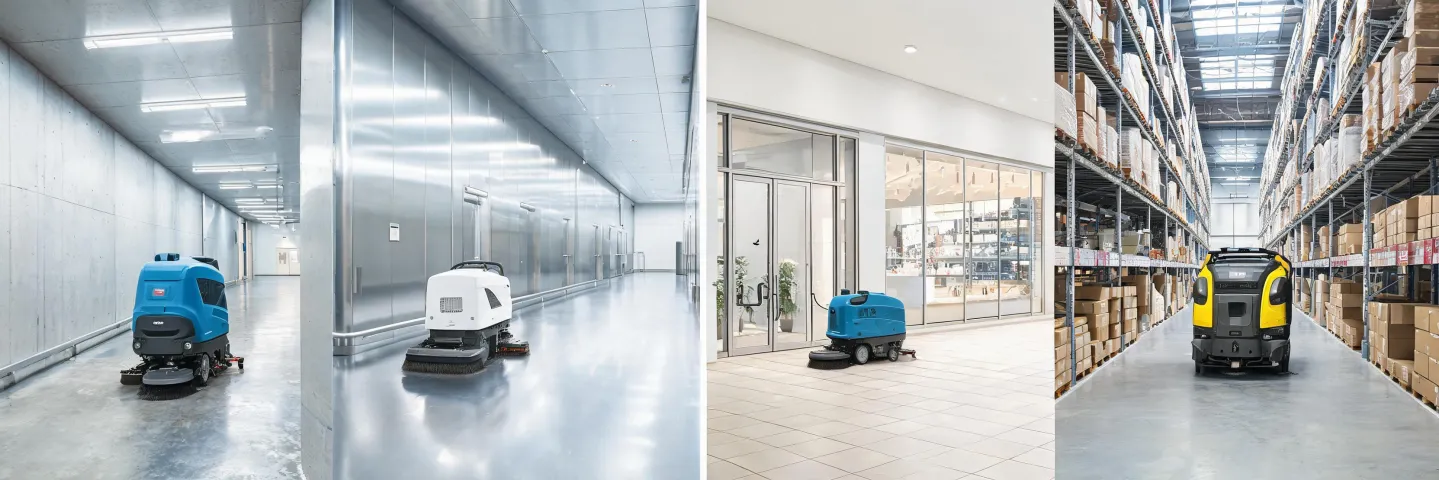
Commercial cleaning equipment in multiple facility environments

Distribution centers need cleaning equipment that works around pallet flow, dock dust, tire marks, and narrow travel lanes. Minuteman planning usually starts with a dry debris pass, then confirms whether a rider scrubber can recover productive minutes across long aisles. Battery access, dump points, and shift turnover matter as much as the nominal cleaning path because a machine parked at the charger is not cleaning.

Recommended review: sweeper plus rider scrubber sequence, operator route map, and consumable stocking list.

Customer-facing floors need compact turning, quiet operation, quick recovery, and a finish that looks consistent under bright lighting. A small walk-behind scrubber may be more useful than a larger unit if the site has displays, checkout lanes, and frequent interruptions. The planning conversation should also cover storage visibility, water access, and who is trained to complete recovery tank cleanup after closing.

Recommended review: compact scrubber path, evening cleaning window, and operator checklist.

Food and packaging environments introduce wet tracking, production residue, sanitation schedules, and floor drains. Equipment selection needs careful attention to recovery performance, splash control, and the procedures that separate daily cleaning from deeper maintenance. A Minuteman review can document brush choice, squeegee condition, and charging placement so supervisors know what must happen between production blocks.

Recommended review: scrub pressure, recovery behavior, and inspection interval.

Public buildings often have mixed surfaces, elevators, storage limits, and staff who share equipment across departments. The machine plan should prioritize clear controls, easy daily inspection, predictable parts replacement, and the ability to clean without blocking hallways. A compact scrubber, a sweeper for entry debris, or a staged fleet can all be correct depending on traffic pattern and available labor.

Recommended review: shared operator plan, storage footprint, and parts routing.

Method by floor condition

Cleaning method trade-offs by floor condition.

The same floor can be cleaned several ways. This comparison weighs the options on the dimensions that actually decide cost and result, so the choice is a documented trade-off rather than a habit.

MethodBest whenLimit / costRecovery & finish
Dust mop / manualLight dust, small area, low budgetSlow, labor-heavy, inconsistent on filmNo water recovery; finish varies by operator
Walk-behind scrubberObstructed or sub-15,000 sq ft floorsLower coverage rate per hour than a riderGood recovery; consistent wet finish
Rider scrubberLong open aisles, single large areaTurning room, charging window, storage footprintHighest coverage rate; finish depends on squeegee setup
Sweeper before scrubbingHeavy dry debris, packaging scrap, gritAdds a second pass and machineProtects squeegees and recovery water for the scrub stage

How to validate the choice on your floor

Match the machine to the floor condition, not the industry label.

Send the environment, shift window, and surface details. Minuteman guidance can narrow the scrubber or sweeper path before your team requests final pricing.