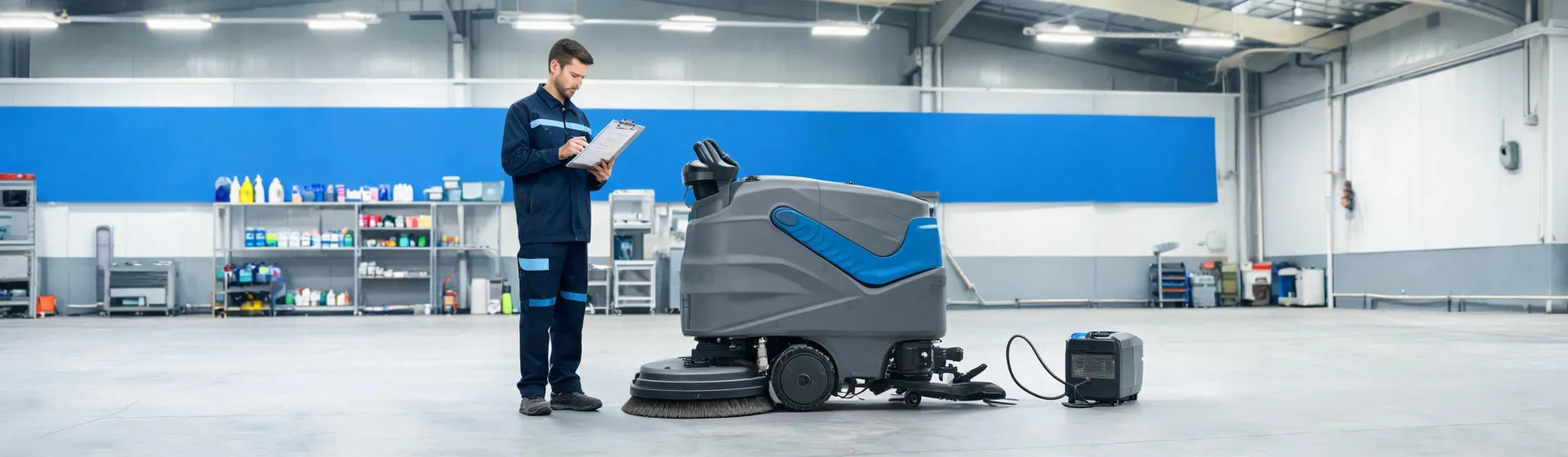
Technician reviewing floor scrubber service data

Service planning

Minuteman service programs turn machine specs into working shift plans.

Technical support starts before the first machine ships. The goal is simple: keep scrubbers, sweepers, batteries, brushes, squeegees, and operator routines aligned with the way each facility actually cleans.

Scope before approval

Scope the operating variables before a cleaning fleet is approved.

Minuteman service discussions are built for facility teams that need practical numbers, not a broad equipment brochure. Each review records the working surface, debris profile, storage location, charger access, operator training path, and the parts that should be stocked locally. That gives procurement a defined specification and gives maintenance a cleaner start after delivery.

Floor condition

Inputs
Concrete finish, coatings, expansion joints, drains, and wet pickup expectations.
Output
Recommended scrub pressure, pad or brush style, and recovery behavior.
Shift timing

Inputs
Open hours, dock traffic, operator count, refill points, and battery charging window.
Output
Run schedule, charging assumption, and handoff notes for supervisors.

Machine support

Inputs
Dealer coverage, replacement wear parts, training needs, and planned inspections.
Output
Service routing, consumable list, and first maintenance calendar.

Fleet controls

Inputs
Asset count, storage footprint, operator permissions, and reporting cadence.
Output
Simple control points for uptime, cost, and cleaning consistency.

Numbered method

A direct workflow for selecting and supporting cleaning machines.

01

Measure the floor, not only the building.

Open square footage, aisle interruptions, and wet recovery paths are separated so a scrubber recommendation does not depend on a single rough area number.

02

Model productive minutes per shift.

Tank refills, dumping, charging, battery swaps, and operator travel are included in the discussion because these details decide whether a machine keeps pace with cleaning windows.

03

Define the first service package.

Brushes, pads, squeegees, filters, chargers, and training notes are documented before the purchase so support is ready when the unit reaches the floor.

Selection considerations

Trade-offs we make explicit before a machine is specified.

A clean service plan names its limits. These are the decisions where two reasonable buyers can land differently, and where Minuteman states the cost of each path instead of defaulting.

Rider vs walk-behind

Favors rider
Long open aisles, single large area, one or two shifts where operator travel time dominates.
Favors walk-behind
Sub-15,000 sq ft floors, obstacles, tight storage, where turning room and ready-time matter more than top speed.

Battery vs corded power

Battery
Free movement and no trailing cord, at the cost of charging windows, battery replacement cycles, and an electrical-room plan.
Corded / hybrid
No charging logistics, but limited reach and cord management in traffic lanes.

Stated limits

Coverage figures
Assume planned aisle conditions; obstacle density, broken seams, and standing water reduce real output.
Runtime figures
Depend on battery age, pad pressure, and water use, and fall over a machine's service life.

What service cannot fix

Undertrained operators
Even a correct machine loses productive minutes without recovery-tank and charging discipline.
Wrong-tool jobs
Wet scrubbing heavy dry debris damages squeegees; a sweeper pass must precede it.

Next step

Ask for a service-ready Minuteman machine plan.

Share the site conditions once and receive a practical checklist for product selection, battery planning, operator training, and support routing.